Bel Air, MD · Garage Door Service
Keeping Fallston's 1970s-Built Garages Running Through Harford County Winters
Fallston homes built mostly in the 1970s pair steel doors with torsion hardware that wasn't built for Harford County winters. Here's what wears first and why.
- Repairs & new doors
- Springs & openers
- Serving 7 nearby communities
Why It Happens Here
Fallston is a small place to service - about 3,470 households, nowhere near the scale of the wider Bel Air service area's 158,666. That matters for maintenance work: it's not a town with thousands of identical townhouse doors cycling through the same failure on the same week. It's a spread of individual houses, most of them put up around 1976, right in the middle of the area's broader 1957-1990 building window and its heavier 1960s-70s concentration. A door that age has had four and a half decades of temperature swings on its torsion spring, and the cold-climate rating for this area isn't a mild one - it's classed as severe cold, which means real freeze-thaw cycling on steel panels and lubricant that thickens up in an unheated garage every winter. Add a median household income here of $154,400, well above the $95,975 median for the service area as a whole, and you get a different pattern of calls: owners who maintain before something breaks rather than after. That's the job in Fallston - fewer doors, older average hardware, and owners who call for a tune-up instead of a tow.
The DIY Question
You can do some of this yourself. Wiping down tracks, checking that the rollers aren't cracked, and testing the auto-reverse by setting a 2x4 under the door are all fair for an owner to handle on a Saturday morning. What we don't recommend touching is the torsion spring itself - on a door built around 1976, that spring has had roughly fifty years of wear even if nobody's touched it, and the tension stored in it can break a wrist or worse if the winding bar slips. Lubricating hinges and rollers with the wrong product is another common mistake; household oil attracts grit and gums up faster in cold weather than it helps. If your door is sluggish only in the first cold snap of the year and smooths out once the garage warms up, that's a maintenance issue, not a parts failure - grease viscosity, not a dying opener. If it's sluggish year-round, that's past the DIY stage.
How Long It Takes
A standard maintenance visit - spring check, track alignment, hardware tightening, roller and hinge service, opener sensor check - runs about the same length of time whether the door is in Fallston or anywhere else we cover. What changes is the drive: Fallston sits about five miles from our shop in Bel Air, close enough that a maintenance call doesn't eat half a day the way it would farther out in the territory. That short run means we can usually get a technician out and back without the visit turning into an all-day commitment on either end, which keeps scheduling flexible for owners who want this done before winter rather than after something seizes up.
How We Fix It
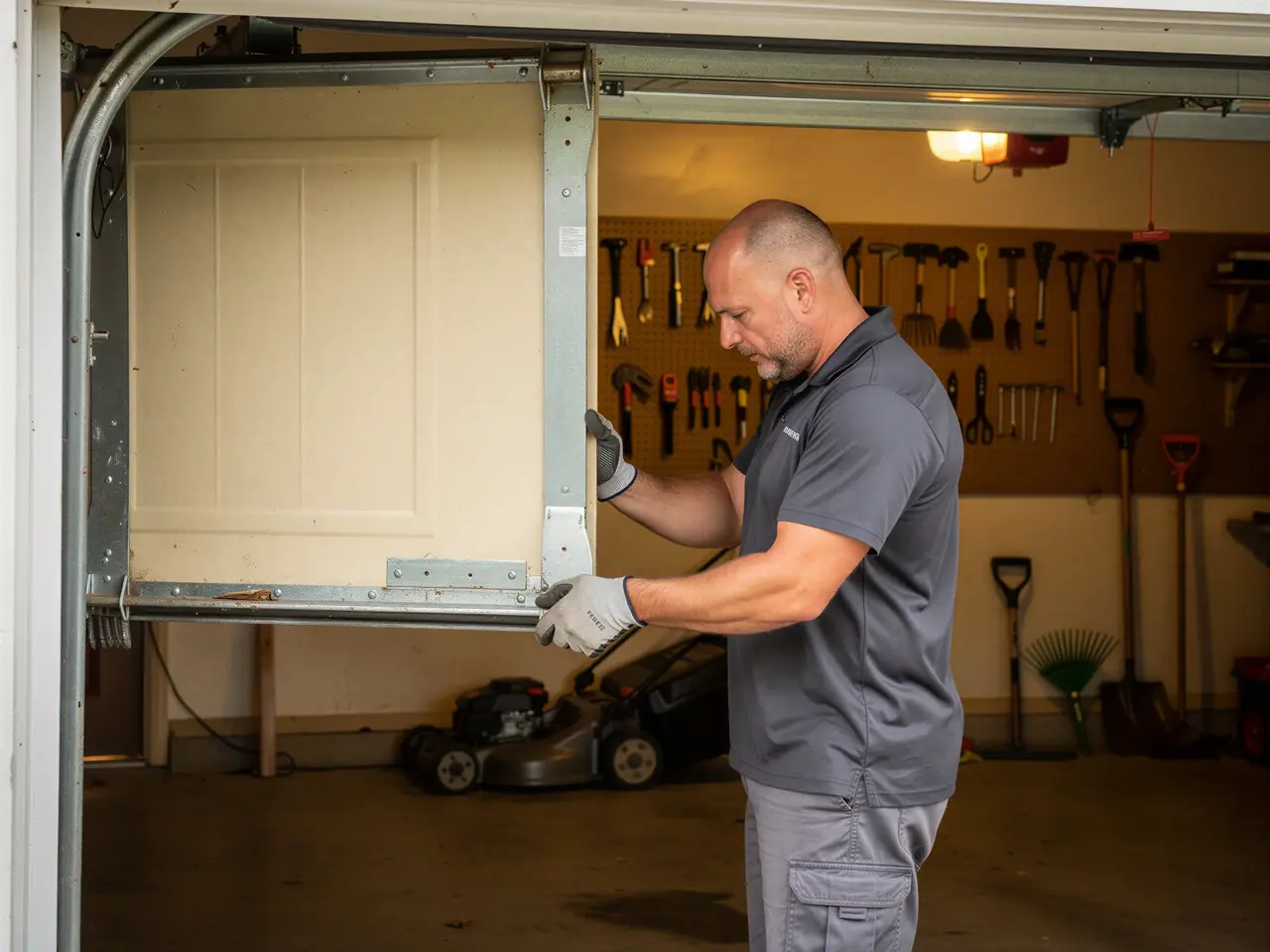
On a house from the 1976 era, the hardware we're usually adjusting is original-spec torsion on a side-mount bracket, not the newer extension-spring setups you see in houses built in the last fifteen years. Maintenance on that older hardware means checking spring wind count against door weight, re-torquing the center bearing, and swapping worn rollers before they score the track rather than after. We check the cable drums for fraying, since cable on original 1970s installs has often never been replaced. One honest limit here: if the spring itself is original and already showing rust pitting or flat spots, we're not going to call that a maintenance visit - we'll tell you it needs replacing, and a tune-up on a spring that's about to go is money that doesn't buy you anything.
How It Shows Up
The symptom we hear about most in Fallston calls is a door that's noticeably louder or stiffer on the first cold morning of the season - a direct result of severe-cold cycling working on fifty-year-old track and hardware. Owners also mention the door catching slightly on one side before it ever gets bad enough to jam, a sign the torsion spring is wearing unevenly rather than failing outright. Because household incomes here run well above the area average, we also get more calls that are purely preventive - no symptom yet, just a request to check things before the cold sets in. That's the right instinct on a door this age.
Frequently asked questions
How often should a 1970s-era garage door in Fallston get serviced?
Once a year is the baseline we'd suggest, ideally before the first hard cold snap. Hardware from the 1976-era stock in this area has had decades of freeze-thaw exposure, and a yearly check catches spring wear, cable fraying, and roller cracking before any of it strands the door shut.
Why does my door only stick in cold weather?
Grease and lubricant thicken in an unheated garage once temperatures drop, which is common given this area's severe-cold rating. If the door loosens up once the garage warms, that's a lubrication and maintenance fix, not a sign the opener or spring is failing.
Do you have a shop in Fallston?
No. We're based in Bel Air, about five miles out, and we drive to Fallston for maintenance and repair calls. The distance is short enough that it doesn't add meaningfully to scheduling.
Is it worth maintaining an original spring from the 1970s instead of replacing it?
Sometimes, but not always. If the spring still winds true with no rust pitting or flat spots, a maintenance visit can extend its life. If it's already showing wear, we'll say so plainly - servicing a spring that's about to fail isn't a real fix.
Book garage door service in Bel Air
Call now or request a quote - tell us what the door is doing and where you are.