
Bel Air, MD · Garage Door Service
Emergency Garage Door Repair, Fallston MD
Fallston sits 5 miles from our Bel Air crew, and that drive shapes how a broken spring or jammed track gets fixed on 1970s-era doors here.
- Repairs & new doors
- Springs & openers
- Serving 7 nearby communities
Why It Happens Here
Fallston is five miles out from our Bel Air crew, which isn't far, but it means the call doesn't start with a knock on your door - it starts with a truck leaving a shop and covering that distance first. We mention it because it matters for how an emergency actually plays out here, not because it's a long haul.
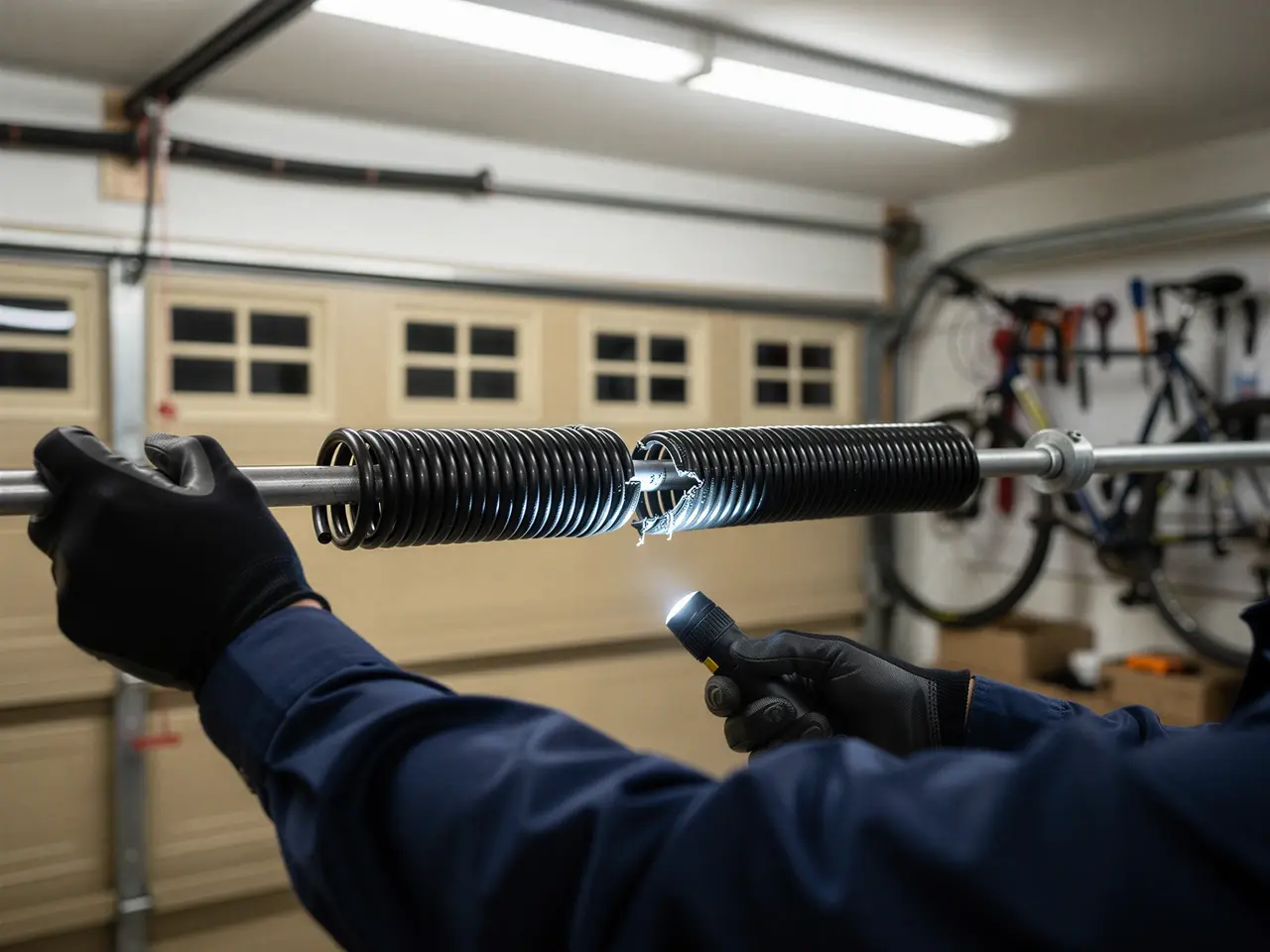
The bigger factor is what's behind the door itself. Houses in this part of the county run a median build year of 1976, and that lines up with the wider stock across the area, which is mostly 1960s and '70s construction. Doors from that era were hung with lighter torsion springs and steel tracks that weren't built for the cycle counts modern openers put on them over fifty years.
Add a cold-climate winter on top of that and you get a predictable pattern: steel contracts, lubricant stiffens, and a spring that's already fatigued from forty-plus years of cycling finally lets go on a January morning. That's not bad luck. That's an aging door meeting a cold snap it was never going to win against forever.
The DIY Question
A torsion spring under tension can break a hand or worse, and on a door this age, the spring is almost never the only tired part - the cable, the drums, and sometimes the bottom bracket have all been flexing together since the Carter administration. We won't talk anyone through replacing a spring over the phone. That's not us being cagey; it's genuinely not a safe repair to walk a homeowner through.
What you can check yourself: the opener's safety sensors (the little eyes near the floor on each track), whether the door is binding on one side versus the other, and whether the noise is a bang (spring) or a grind (roller or track). That tells us what to bring on the truck.
One honest limit: if your opener is original to a 1976-era house, parts for it may not exist anymore. We'll tell you straight if we're fixing the door and replacing the opener rather than chasing obsolete gears.
How Long It Takes
The five miles from Bel Air isn't the bottleneck most days - it's whether the part needed is one we carry stocked for 1970s-era hardware or one we have to source. A standard torsion spring swap on a door from this period is usually a same-visit fix once we're on site, because that's common enough stock.
What slows things down is less common: original wood-composite panels, obsolete drum sizes, or a bottom bracket that's rusted into the track from decades of cold-season condensation. On those, the first visit is often diagnosis and stabilizing the door safely, with a second trip once the part's in hand.
We're not going to promise a number here we can't back up for Fallston specifically. What we can say is that the distance from Bel Air doesn't change the repair - it changes when in the day we can get there, and that's a scheduling conversation, not a guess.
How We Fix It
On a door from the 1960s-70s stock common to this area, we start by matching hardware to era before touching anything. Springs, cables, and drums from that period are often sized differently than what a big-box kit sells today, and forcing a mismatched spring onto an old shaft is how you get a second emergency call inside a year.
If the track is bent - common after a car bumps it or ice builds on the threshold - we check whether it's a bend we can pull back true or one that needs a full section swapped. We don't try to save a track that's been kinked more than once; it'll just fail again under load.
For openers original to a 1976-built house, we're honest about replacement versus repair. If the motor's gear is stripped and the model's been out of production for years, we'll say so and quote a new unit rather than hunt for a part that doesn't exist.
How It Shows Up
In a cold-climate winter, the failure usually looks the same way twice: either the door won't lift at all - a dead giveaway for a broken spring - or it lifts a few inches and stops, which is often a cable that's jumped the drum under cold-stiffened tension.
On older tracks typical of the 1960s-70s homes here, you'll sometimes hear a grinding or scraping sound before anything actually fails - that's a roller wearing through its bearing, and it's worth a call before it seizes and bends the track on the way down.
A door that reverses itself halfway closed, in a house with the original hardware, is almost always a sensor knocked out of alignment or a spring losing tension unevenly on one side. Either way, don't force it by hand. Call it in and we'll bring the right hardware from the start instead of guessing twice.
Frequently asked questions
How far is Fallston from your shop, and does that affect emergency calls?
Fallston is about five miles from our Bel Air location. It's a short drive, and it doesn't change the repair itself - what changes the timeline is whether the part your door needs is something we carry stocked or something we have to source for older hardware.
Why does my 1970s garage door keep breaking in winter?
Houses in this area have a median build year around 1976, and the original torsion springs and steel tracks from that period weren't designed for fifty years of cycling. Cold weather stiffens the steel and lubricant further, which is usually what pushes an already-fatigued spring to finally snap.
Can you still get parts for an opener that old?
Sometimes, sometimes not. If your opener is original to a mid-1970s build, the specific gear or circuit board may be out of production. We'll check before promising a repair, and if it's not available, we'll quote a replacement instead of stringing out a fix that won't hold.
Book garage door service in Bel Air
Call now or request a quote - tell us what the door is doing and where you are.