
Bel Air, MD · Garage Door Service
Weather Seals and Drafts in Bel Air Garage Doors
Bel Air homes built mostly 1957-1990 lose heat through worn garage door seals in severe cold. Here's what drives the job and what it costs to fix it right.
- Repairs & new doors
- Springs & openers
- Serving 7 nearby communities
How Local Conditions Play In
Most of the garage doors we look at around Bel Air sit on houses built between 1957 and 1990, with the median build year landing around 1977. That's a long run of housing stock, and it means a lot of original bottom seals, worn vinyl astragals, and aluminum track that's shrunk and expanded through decades of cold winters. This area sits in a severe cold climate band, which means real freeze-thaw cycling every winter - not just a cold snap here and there. That cycling is what dries out rubber seals, warps wood jamb trim, and opens gaps at the corners where a door meets the slab.
Across the 22 named communities we see work in, from Pleasant Hills four miles out to Stewartstown twenty miles north, the pattern repeats: a door that sealed fine when the house was new now has a quarter-inch gap under one corner, or a side seal that's cracked straight through. It's not damage from one storm. It's forty-plus years of a door doing its job in a climate that's hard on rubber and aluminum both. The fix is usually not complicated, but figuring out whether you need a seal replacement or a full bottom astragal and track adjustment takes a look at the actual door, not a guess over the phone.
The Cost of This Job
We don't have a fixed number to give you here without seeing the door, so we won't make one up. What drives the cost on a seal and draft job is usually how much of the system has moved out of alignment - a bottom seal swap is one thing, but if the track has racked out of square from decades of thermal cycling in this climate, you're also paying for an adjustment or a track reset, and that's a different job.
Given the median household income in this service area runs close to $95,975, most of the calls we get are people who want the door fixed properly once rather than patched twice. That's a reasonable position. A cheap strip seal from a hardware store will stop a draft for a season or two on a door that's otherwise sound, but it won't hold if the track or jamb is out of true. We'll tell you straight which one you've got before we quote anything.
What Is Going On
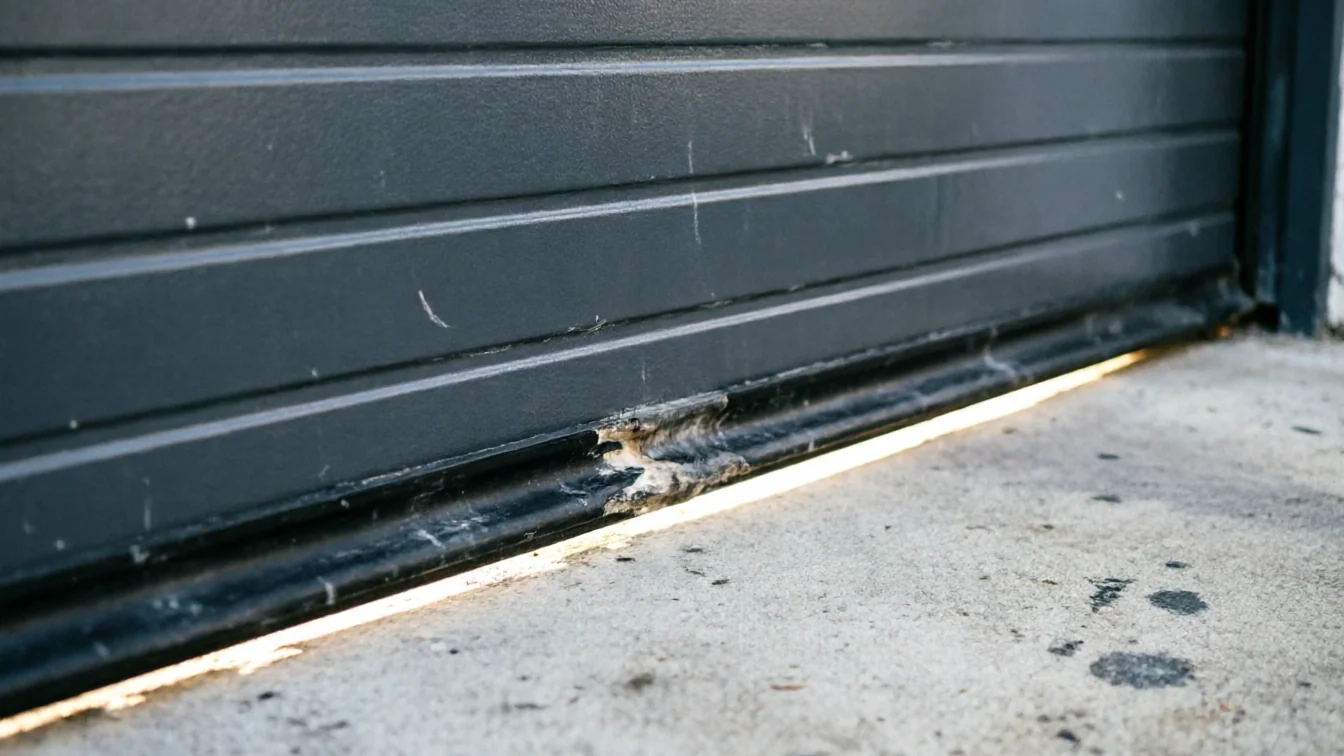
On a house from the 1960s or 70s stock that makes up most of this area, the garage door bottom seal is usually the first thing to go. It's rubber or vinyl, it's been compressing against concrete for decades, and in a severe cold climate it loses flex every winter until it cracks or flattens out permanently. Once that happens, cold air comes straight under the door, and in an attached garage that's often the wall right next to a bedroom or laundry room.
The second thing we see on houses this age is side seal and top seal wear where the door meets painted wood jamb trim. Wood that old has usually shifted slightly out of square, so even a new seal won't close the gap evenly - one side is tight, the other has daylight showing through. That's a jamb issue, not a seal issue, and no amount of new weatherstripping fixes it on its own. Track alignment plays into this too: fifty years of a door opening and closing in freeze-thaw conditions can walk a track off true by a small amount that's enough to let drafts through at the corners even with a decent seal installed.
Leaving It Alone
A drafty door isn't an emergency, and we'll say that plainly. If the seal is cracked but the door still opens, closes, and locks fine, you can live with it for a season without anything breaking. The honest limitation here is that we can't tell you from a phone call whether your gap is a ten-minute seal swap or a half-day track and jamb job - that takes eyes on the door.
What we'd caution against is ignoring it indefinitely in this climate. Cold air finding its way in every winter for several more years keeps working on wood jamb trim that's already decades old, and what starts as a seal problem can turn into rot or further warping that costs more to fix later. If the garage sits next to living space, the draft is also costing you on heating, winter after winter, in a climate band that doesn't let up for long stretches. It's worth a look before another cold season passes, not because the door is failing, but because this is exactly the kind of small problem that gets more expensive the longer a house this old sits with a gap in it.
Frequently asked questions
Why does my garage door seal keep failing every couple of years?
On houses built in the 1960s-70s range that make up most of this area, the seal is doing a lot of work against a severe cold climate with real freeze-thaw cycling every winter. Rubber and vinyl lose flexibility faster under that stress. If you're replacing seals every year or two, the track or jamb alignment is probably the real problem, not the seal itself.
Is a drafty garage door worth fixing before winter or can it wait?
It can usually wait a season if the door still operates normally. But in this climate, an unsealed gap keeps stressing old wood jamb trim and costing you on heating if the garage is attached to living space. We'd rather look at it once than have you patch the same spot three winters running.
Can I just add a new rubber strip myself?
You can, and it'll help for a while if the problem is only the bottom seal. It won't help if the track has racked out of square or the jamb has shifted, which is common on houses from this era. We can tell you which one you're dealing with in a few minutes on site.
Related garage door services in Bel Air
More garage door guides
Book garage door service in Bel Air
Call now or request a quote - tell us what the door is doing and where you are.