
Bel Air, MD · Garage Door Service
Garage Door Off Track: What's Going On and What It Takes to Fix
Garage door jumped its track in Bel Air? See why it happens so often in homes built 1957-1990, what parts we carry, and what the fix involves.
- Repairs & new doors
- Springs & openers
- Serving 7 nearby communities
The Cost of This Job
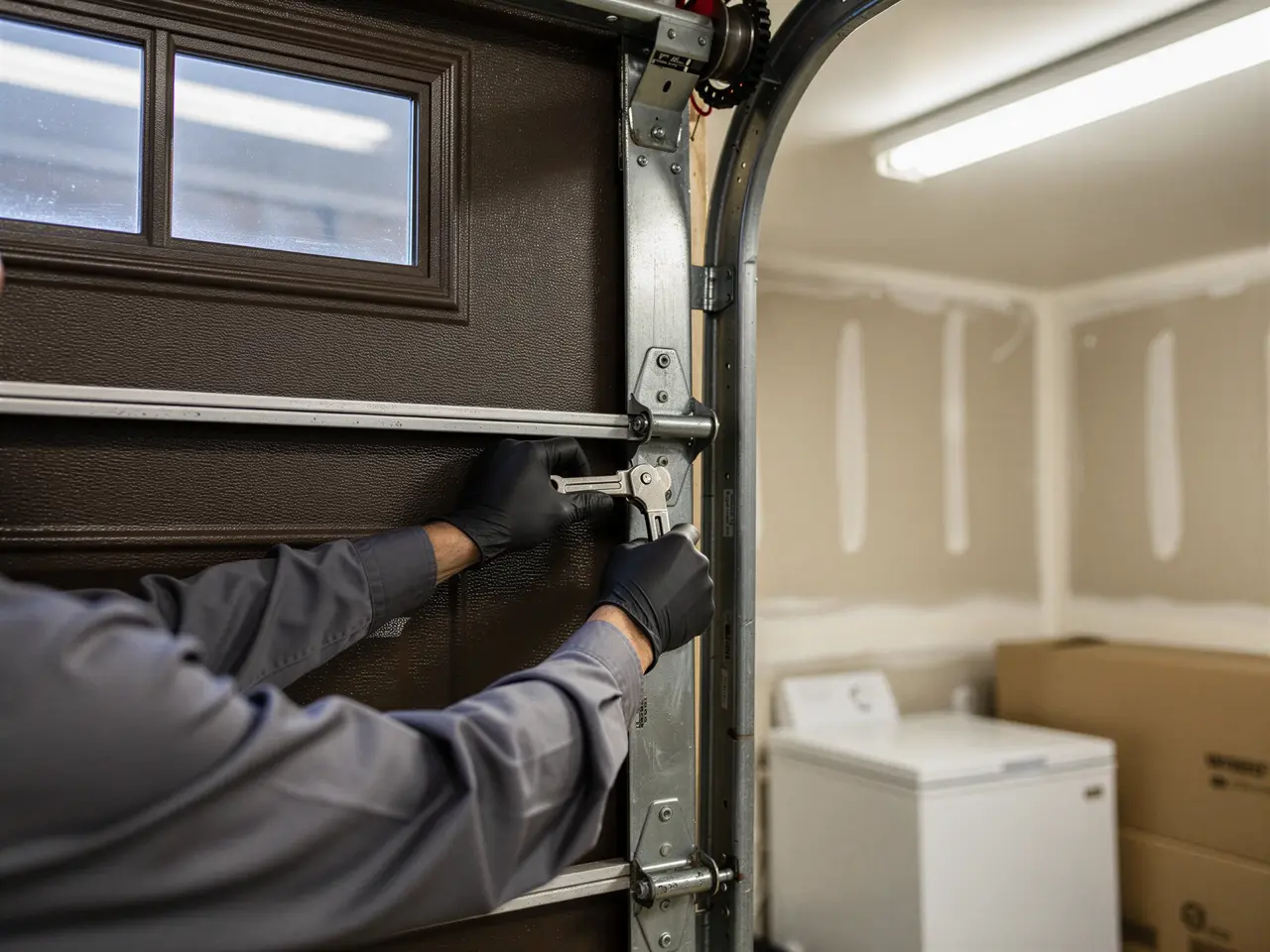
We're not going to throw a number at you that doesn't mean anything until we've seen the door. An off-track door can be a ten-minute fix - a bent roller stop or a loose track bracket - or it can mean a bent track section, a damaged panel, and a cable that jumped the drum at the same time. Those are very different jobs.
What drives the cost isn't the brand of door, it's how far the carriage traveled before it derailed and what else got pulled with it. A door that slipped an inch off one roller is cheap to put right. A door that came all the way down on one side and twisted the track against the jamb usually means we're replacing track, not just realigning it, and sometimes a panel too.
We'll tell you on site, before any tools come out, whether this is a realignment or a track swap, and whether the opener itself took any strain from trying to run a door that wasn't sitting square. If the track is original to a house built in the 1960s or 70s, parts availability can slow things down - we'll say so up front rather than promise a same-day fix we can't back up.
Parts We Carry
We stock the rollers, track brackets, and cable that cover most of what we see on the doors common to this area's housing stock - homes built mostly between 1957 and 1990, with a lot of that concentrated in the 1960s and 70s. That means standard-width steel track in the sizes that fit torsion and extension setups from that era, plus the nylon and steel roller stock that replaces the worn originals.
What we don't carry on the truck is obsolete hardware for doors that have been discontinued by their manufacturer for decades. If your door is original to a house from that build window and nobody's touched the track since, there's a real chance the exact bracket pattern isn't made anymore. In that case the honest move is usually a full track replacement with current hardware rather than hunting for a part that doesn't exist, and we'll walk you through that trade-off rather than quote a fix we can't actually deliver.
We also carry the strut reinforcement and end bearing plates that cold-climate installs need, since a track that's slightly out of square tends to show it faster once temperatures drop.
Why It Happens Here
This area sits in a cold climate zone with real winter swings, and that matters more for an off-track door than people expect. Steel track contracts in the cold, and the fasteners holding it to the jamb loosen over repeated freeze-thaw cycles faster than they would somewhere milder. On a house built in the 1960s or 70s - which describes a large share of the homes here - that track has been through fifty-plus winters of that cycle, and the original mounting hardware wasn't built for it.
The other piece is the housing stock itself. A door installed when the house went up, say in the 1970s median build year, was almost always a lighter-gauge panel on simpler roller hardware than what's sold today. Lighter panels flex more, and flexing panels put uneven pressure on the rollers, which walk the track over time. Combine that with a cold snap that shrinks the track metal overnight and you get a roller that pops the lip of the track - usually at the curve near the top, where the stress is highest.
It's not bad luck. It's old hardware meeting a climate that's hard on steel, repeated every winter for decades.
How It Shows Up
Most people notice it one of two ways. Either the door won't close all the way and hangs crooked a few inches off the ground on one side, or it comes down and then won't go back up - the opener strains, clicks, and gives up because the carriage is fighting a track that's no longer straight.
Sometimes it's quieter than that. A door that used to run smooth starts making a grinding or popping sound near the top of its travel, which is usually a roller riding the edge of the track rather than sitting inside it, right before it finally jumps. If you catch it at that stage, it's almost always a cheaper fix than waiting for the door to come down crooked.
Don't force it. Running the opener against a door that's already off track is how a bent track becomes a bent track and a cracked panel. Pull the release cord, leave the door where it is, and call before anyone tries to muscle it back into the opening by hand.
Frequently asked questions
Can I push the door back onto the track myself?
We'd rather you didn't. A door under spring tension that's already off one roller can drop suddenly or swing unevenly, and garage doors are heavy enough to cause real injury. Disconnect the opener with the release cord, leave the door alone, and call. If it's a simple roller-stop issue, the fix on our end is usually quick.
Is a bent track always a full replacement?
Not always, but often. A track bent in one spot can sometimes be straightened if it's minor, but once steel track has been bent hard enough to pop a roller out, it's usually weakened at that point and will bend again under load. We check it on site and tell you straight which case you're in.
Why does this happen more in winter?
Cold contracts the steel track and loosens the fasteners holding it to the frame, especially on older mounting hardware. Combined with panels and rollers that have been running for decades on houses built mid-century, a track that's slightly out of alignment is more likely to let a roller walk off the edge when temperatures drop.
Related services
By Neighborhood
Off Track Repair across the Bel Air area
We also handle off track repair in these Bel Air-area suburbs.
Book garage door service in Bel Air
Call now or request a quote - tell us what the door is doing and where you are.