
Bel Air, MD · Garage Door Service
Garage Door Repair for Rosedale's 1960s Doors
Rosedale's garage doors mostly date to the early 1960s - steel, single-layer, narrow track. We drive out from Bel Air to fix springs, openers, and panels built for that era.
- Repairs & new doors
- Springs & openers
- Serving 7 nearby communities
Parts We Carry
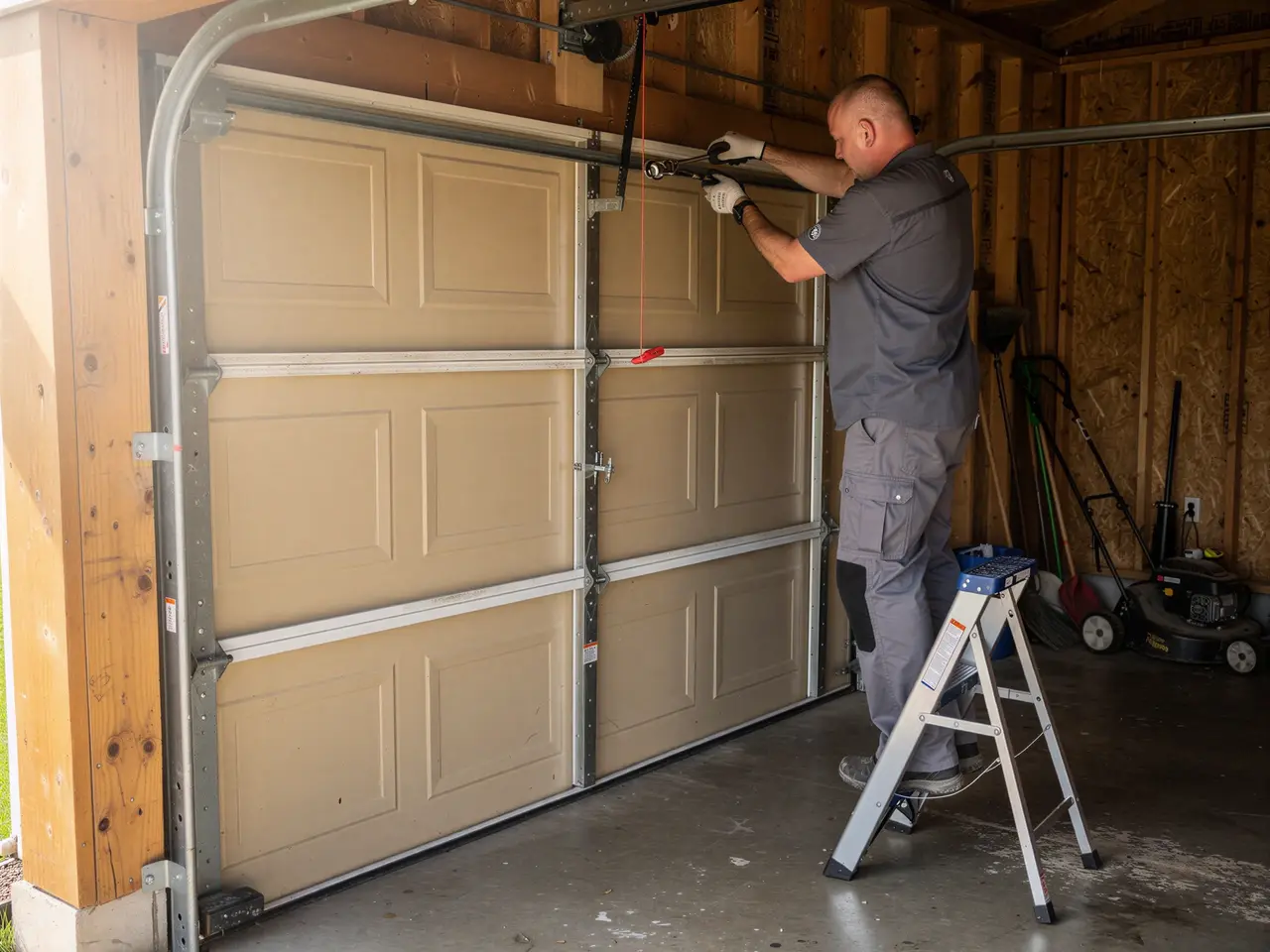
Most of Rosedale went up around 1963, and the garage doors that came with those houses are what you'd expect from that build year: single-layer steel, no foam core, usually a 7-foot or 8-foot single door rather than the wide double-car openings that came later. The track is narrower than what you'll find on anything built after the 1980s, and the hardware is lighter - thinner torsion springs, smaller drums, rollers sized for a door that weighs less than today's insulated steel or composite panels.
That matters for repair because the parts bin isn't universal. A roller or hinge that fits a 2015 door often won't sit right on a 1963 frame without an adapter plate, and we carry stock sized for both eras rather than assuming the newer parts will just work. Springs are the other piece - a torsion spring wound for a 90-pound single door fails differently than one wound for a 200-pound insulated double, and using the wrong cycle-rated spring just means a faster second failure.
We stock standard torsion and extension springs, rollers, cables, and hinges on the truck, plus the openers and safety sensors that fail most often regardless of door age. If a panel needs full replacement on an older frame, that's sometimes a special-order part, and we'll tell you that up front rather than make you wait for a truck roll to find out.
Why It Happens Here
Maryland's winters put real stress on a garage door system - the climate here runs in the cold-and-severe band, which means hard freeze-thaw cycles every winter, not just the occasional cold snap. On a door built in the early 1960s, that stress lands on steel and springs that have had sixty-plus years of cycling, often with the original hardware still in place because nobody's had a reason to replace it piece by piece.
The common failure we see on Rosedale's older stock is a torsion spring that's lost tension gradually, so the door feels heavier every month until one morning it won't lift at all, or an opener straining against a spring that should be doing most of the lifting. Steel track that's shifted slightly out of alignment over six decades is another one - it doesn't always show up as a jam, sometimes it just shows up as a door that's noisier than it used to be.
Rosedale sits about 17 miles out from our shop in Bel Air, and the housing age here runs earlier than a lot of the rest of our service area, where stock typically dates closer to the mid-1970s. That earlier build year is the reason the fault pattern here skews toward spring fatigue and track wear rather than the opener-board failures we see more often on newer doors.
Getting It Booked In
We cover Rosedale from Bel Air, so a call here means a truck making that 17-mile drive, not a local branch dispatching down the street. We don't carry a storefront or depot in Rosedale itself - worth saying plainly so nobody's expecting a same-hour drop-in the way they might from a shop two blocks away.
When you call, tell us the door's rough age if you know it and what it's doing - won't open, opens and reverses, makes noise on the way down. For a house in this area that's likely original-era stock, that detail helps us load the right spring size and track hardware before we leave the shop, instead of discovering we need a second trip for a part. If you don't know the age, the year the house was built is usually close enough - we'll work from there.
The DIY Question
A torsion spring on any door, old or new, holds enough stored energy to break fingers or worse if you unwind it wrong - that's not a Rosedale-specific fact, it's true everywhere, and it's the one thing we'd ask you not to attempt yourself regardless of how handy you are. Swapping a roller or lubricating a track is reasonable homeowner work. Touching a spring that's wound onto a shaft is not.
Where the DIY line gets harder on an older door specifically: once a panel or section on a 1960s-era door needs replacing, matching the original isn't always possible, since the sizing and steel gauge from that era isn't what's stocked today. Sometimes the honest answer is that a full section replacement doesn't make sense on a door that old, and a full door replacement is the better money. We'll tell you that straight rather than patch something that's going to fail again in a year.
Frequently asked questions
How far out is Rosedale from your shop, and does that affect response time?
Rosedale is about 17 miles from our base in Bel Air. We don't keep a branch in Rosedale, so every call there means a drive - we're upfront about that rather than promising a local response time we can't back up.
Why does my garage door feel heavier than it used to?
On an older door, that's usually a torsion spring losing tension gradually from decades of winter freeze-thaw cycling, not a sudden break. The door gets harder to lift by hand and the opener starts straining. It's a repair, not something to wait out.
Can you match the panel on my original 1960s-era door?
Sometimes, but not always - steel gauge and section sizing from that era often isn't stocked new. If a panel's damaged, we'll tell you honestly whether a matching replacement is realistic or whether a full door replacement is the better move.
Do you carry parts for older doors on the truck?
We stock standard torsion and extension springs, rollers, cables, and hinges sized for both older single-layer steel doors and newer insulated ones. A full panel for an original-era door is sometimes a special order, and we'll flag that before we schedule the job.
Book garage door service in Bel Air
Call now or request a quote - tell us what the door is doing and where you are.